
Nvidia has recruited six of the largest alternative managers to underwrite its own customers. The reclassification at the centre of the deal is the part allocators should be underwriting.
Nvidia announced on Monday 10 August that it had signed memorandums of understanding with Apollo Global Management, BlackRock, Blackstone, Brookfield Asset Management, Goldman Sachs and KKR to create what it calls compute financing platforms. The stated ambition is to mobilise more than $500 billion of third party capital so that hyperscalers, frontier AI laboratories and large enterprises can borrow against computing hardware rather than pay for it from their own balance sheets.
The announcement was staged as a joint television appearance running past thirty minutes with almost no transactional detail disclosed. No project names. No individual commitments. The half trillion figure is an aggregate ambition over time rather than capital raised, and only memorandums have been signed. Final agreements remain outstanding.
That gap between announcement and closing is the first thing an allocator should hold in mind. Arrangements of this type routinely shrink, restructure or stall in the months between the press conference and the first drawdown.
The reclassification is the trade
Strip away the headline number and one idea is doing all the work.
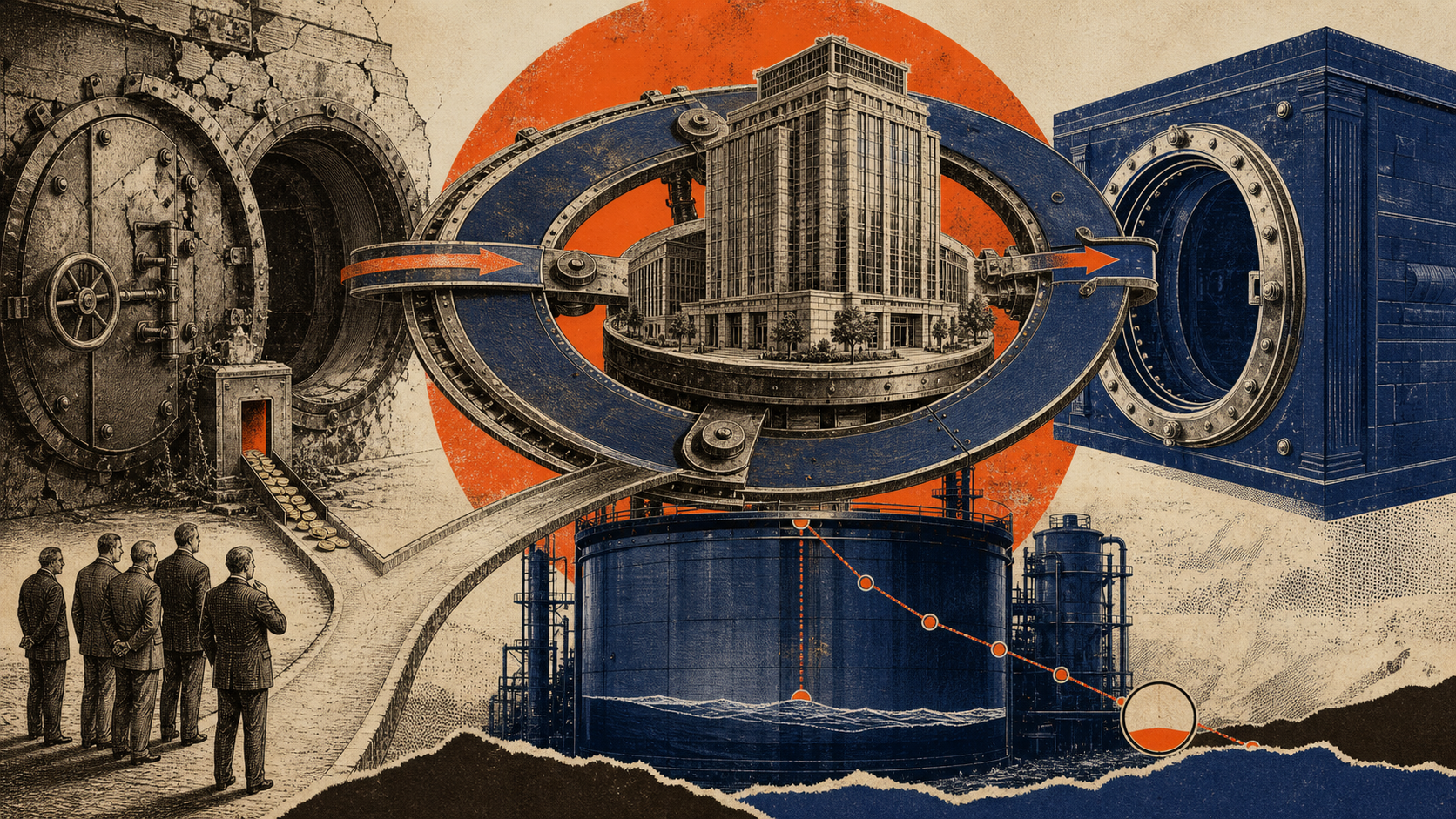
Graphics processing units have historically been accounted for as rapidly depreciating equipment, superseded the moment a faster generation ships. The compute financing structure asks lenders to treat them instead as long lived infrastructure, closer in character to a toll road, a fibre network or a power plant. Nvidia’s chief executive has described the hardware as revenue generating, productive, long lived and transferable between customers.
If that reclassification holds, an entirely new collateral class opens up to private credit and infrastructure capital, and the addressable market for asset backed lending expands by an order of magnitude. If it does not hold, lenders have written long duration paper against an asset whose replacement cycle is measured in quarters.
Credit markets have already registered the ambiguity. The cost of insuring Nvidia’s own debt against default rose following the announcement and has roughly doubled since late May. Equity investors read the news as a bottleneck being cleared. Credit investors read it as a bottleneck being financed.
Why the money had to come from somewhere else
The structure exists because the balance sheets that were funding this cycle have run out of room.
The largest cloud platforms have collectively guided to roughly $720 billion to $745 billion of capital expenditure in 2026, an increase of about 77 percent on last year. Consensus expectations for 2027 have more than doubled inside twelve months, moving from approximately $480 billion in August 2025 to around $1.08 trillion this month, according to Bank of America.
Moody’s has warned that spending at this scale is consuming free cash flow and pushing technology groups into heavier borrowing. Alphabet recorded negative free cash flow of $5.9 billion in a quarter in which it spent $44.9 billion on projects.
Debt raised through a compute financing platform sits with the financing vehicle rather than on the operator’s own accounts. Credit ratings are protected. Conventional borrowing capacity is preserved. For operators without investment grade ratings the effect is larger still, since they gain access to terms previously reserved for the giants.
Who is actually holding the risk
The six firms will each make their own lending decisions. Nvidia’s role is to connect customers to financing partners and, critically, to guarantee up to a quarter of any given transaction. That guarantee lowers the coupon the borrower pays while leaving the majority of credit risk with the lender.
The capital itself is expected to come from institutional pools, insurance balance sheets and private credit vehicles. Executives have already begun sounding out sovereign wealth funds, pension plans and insurers. Retail participation has been raised as a possibility.
That last point deserves attention. A structure that migrates from institutional balance sheets into evergreen and wealth channel wrappers changes character entirely, because the liquidity profile of the vehicle no longer matches the liquidity profile of the collateral.
The circularity question
Nvidia is helping to finance the purchase of Nvidia products. That is not a scandal. Vendor financing is old, legitimate and widespread across capital goods. It is, however, a structural feature that compounds rather than diversifies risk, because the same balance sheet is simultaneously the seller, the partial guarantor and the beneficiary of the demand it is underwriting.
The independent variable in the whole edifice is residual value. Nobody currently knows what a present generation accelerator is worth in five years. Underwriting assumptions on that single input will determine whether this is remembered as the moment compute became an asset class or the moment private credit financed the top of a capital expenditure cycle.
Context: capital was already moving
The compute financing announcement did not arrive into a vacuum. On 3 August, KKR closed its fifth global infrastructure vehicle at $19.2 billion, its largest to date and a Core plus strategy focused on North America and Western Europe. The fund has already committed more than $9 billion, including positions in data centre and digital infrastructure assets. KKR’s infrastructure platform now manages approximately $120 billion in equity, up from roughly $13 billion in 2019.
The capital formation was already underway. Nvidia simply supplied the organising narrative.
What it means for allocators
Note the diversification illusion. Infrastructure allocations, private credit allocations and public equity allocations may now all be expressing the same underlying view on AI capital expenditure.
Underwrite the depreciation schedule, not the headline. Ask any manager offering exposure what residual value curve sits inside the model and what happens to recovery rates if that curve steepens by two years.
Track conversion from memorandum to final agreement. The credibility of the $500 billion figure will be established or destroyed over the next two to three quarters, not by press release.
Watch the guarantee mechanics. A guarantee covering up to one quarter of a transaction is meaningful but partial. Understand where it sits in the waterfall and what triggers it.
Flag wrapper migration. If this collateral begins appearing in daily or quarterly liquidity vehicles, the liquidity mismatch becomes the dominant risk, not the credit itself.